
Eating During Labor Should Not Be Forbidden

In the movies and on TV, laboring women are often depicted as panting, sweaty and sucking on ice chips. Luckily, that image can finally change! After years of food and fluid intake being restricted for women in labor, there has been a closer scientific look at this practice and the ban has been (somewhat) lifted.

Even as some of my most athletic, marathon-running students will agree, labor is one of the most physical acts a woman will go through in her life. So why restrict energy providing nourishment during this time? The reasoning for this protocol is rather outdated. “In many birth settings, oral intake is restricted in response to work by [Dr. Curtis] Mendelson, [a New York obstetrician], in the 1940s. Mendelson reported that during general anesthesia, there was an increased risk of the stomach contents entering the lungs. The acid nature of the stomach liquid and the presence of food particles were particularly dangerous, and potentially could lead to severe lung disease or death” (1).

While Dr. Mendelson’s findings may sound like good reason to avoid food or fluid, obstetrical anaesthesia has changed considerably since the 1940s. With better general anaesthetic techniques and a greater use of regional anaesthesia (2), risks of potential danger have been greatly reduced. Even the ACOG, the American College of Obstetricians and Gynecologists, has announced they are in support of women with uncomplicated pregnancies now consuming “modest” amounts of clear liquids such as water, juices, carbonated beverages, tea, black coffee, or sports drinks (3). While ACOG is still not in support of laboring women eating food, many individual doctors and midwives allow liquid intake for low risk women. A recent study published in the British Medical Journal states, “consumption of a light diet during labor did not influence obstetric or neonatal outcomes in participants, nor did it increase the incidence of vomiting. Women who are allowed to eat in labor have similar lengths of labor and operative delivery rates to those allowed water only”(4). So why not let women eat if they want to?

Truthfully, most women will not have a huge appetite during labor, although it is still important to keep the blood sugar balanced and provide energy for the task at hand. For those who are allowed to eat and have the desire to munch a bit, I would recommend staying away from sugary, processed foods. Keep it light since you will not want anything too heavy in your belly. Think energy food! Ask your helpers to prepare foods like whole wheat toast and almond butter, scrambled eggs or quinoa salad. Also, fresh cut fruit or a brothy vegetable stew are good options. Complex carbohydrates, protein and natural sugars are great energy providers. Years ago, I read in a copy of Midwifery Today a blurb from a midwife about a concoction she always made for her clients. She called it the “midwife’s pitocin” – oatmeal, honey and nuts. Sounds pretty delicious, even if you’re not in labor!

Labor is often a physically draining, dehydrating experience, so remember to also keep hydrated! Dehydration can actually slow labor down. For fluid options, you can try herbal tea, water, watered down sports drinks, coconut water (which is also a great source of electrolytes!), watermelon juice or vegetable broth. You can also make or buy fruit juice popsicles.

It is really important to discuss the option of eating and drinking with your care provider ahead of time, as you definitely do not want to start negotiating this during your labor. For those at a hospital or with a provider who follows the older recommendation of fasting during labor, you will most likely be hooked up to an IV to compensate for your lack of food or fluid. The IV delivers dextrose, which is basically sugar and water. Dextrose is a refined sugar with deleterious physiological effects: it rapidly elevates blood sugar content, causing a temporary energy rise, but this too-high elevation causes the pancreas to secrete more insulin, resulting in a rapid drop in blood sugar and a sudden energy slump. When dextrose is administered intravenously for many hours, the result can be internal physiological havoc, which the patient will experience as exhaustion (5). This artificially induced glucose high can also lead to the baby suffering from hypoglycemia (6). This seemingly innocuous dextrose IV certainly has its downsides that should be considered.

I encourage you not to be shy about asking your care provider for a little leeway in having a light nosh during labor. The benefits really seem to outweigh the risks for both you and your baby.

Happy birthing!

Sources
(1) http://summaries.cochrane.org/CD003930/eating-and-drinking-in-labour
(2) http://summaries.cochrane.org/CD003930/eating-and-drinking-in-labour
(3) http://www.news.com.au/breaking-news/snacking-during-childbirth-is-safe-says-study-in-british-medical-journal/story-e6frfku0-1225715391139)
(4) British Medical Journal: Effect of Food Intake During Labor On Obstetric Outcome: Randomised Controlled Trial
(5) http://www.birthingnaturally.net/barp/iv.html
(6) http://pregnancy.about.com/od/birthplans/a/Choices-That-Affect-Breastfeeding.htm

Related posts:

Interesting Articles Worth Reading!

It seems there has been a small explosion of pregnancy, parenting and baby articles in the news recently. I wanted to connect our community with a few I think are worth your time. Happy reading!

Scientists Discover Children’s Cells Living in Mothers’ Brains
The connection between mother and child is ever deeper than thought

The link between a mother and child is profound, and new research suggests a physical connection even deeper than anyone thought. The profound psychological and physical bonds shared by the mother and her child begin during gestation when the mother is everything for the developing fetus, supplying warmth and sustenance, while her heartbeat provides a soothing constant rhythm. Click to read more.

Home Births: 5 Things Nobody Tells You
The American Academy of Pediatrics has policy statements on pretty much anything you can think of—the role of recess in school, the timing of umbilical cord clamping, gay and lesbians as parents, you name it. But one topic it’s avoided is home births, until today, when it (sort of) took an official position. Click to read more.


‘More Than A Count,’ Infant Mortality Is Societal Struggle

Suze Orman Show : Can I Afford It?

The caller asks, Can I afford a doula? Suze responds: “You cannot afford to NOT get a doula, it is a NEED not a want.”

Related posts:

Maternity Practices in the United States

Last weekend in our Prenatal yoga teacher training, we were discussing the homework the students were asked to complete. They were to write an essay on labor induction and the rise of cesarean births in our country. Though the sources varied, all the students arrived at the same conclusion: US cesarean and induction rates are higher than it is recommended by evidence-based research. The cesarean rate in the US has been hovering around 33% (1) for several years, even though the World Health Organization recommends that it be no higher then 15% (2). The American College of Obstetricians and Gynecologist (ACOG) has recently made a statement to deter doctors from providing cesarean delivery upon maternal request in efforts to lower the c-section rate. ACOG has also updates their guidelines for induction to encourage doctors to wait until week 39 for labor induction unless medically necessary.

Even with the backing of ACOG and other respected organization, there is a staggering difference in what is routinely practiced in maternity care and what has been proven to be beneficial for positive and healthy mom-and-baby outcomes. The chart below illustrates many of the routine interventions that are commonly employed in labor and maternity wards through out the US.


How Can You Avoid Unnecessary Interventions?

The best way to avoid falling into the trap of unnecessary interventions is to educate yourself about the standard maternity practices. Do your research, read books and take a formal Childbirth Education Class. A recent study published in the Journal of Perinatal Education found that “63% of women who attended classes reported that childbirth educators provided helpful information to assist in their decision-making process regarding their choices.”

Also, once you have educated yourself and made some decisions about what interventions you are comfortable with, you need to talk to you care provider to make sure he/she is on board with these decisions. Assuming all is medically sound with mama and baby, most of the standard interventions can be modified to satisfy all involved.

Sources
1. http://www.huffingtonpost.com/2013/03/06/c-section-rate-variation-hospitals_n_2819024.html
2. http://www.childbirthconnection.org/article.asp?ck=10456
3. http://www.improvingbirth.org/2012/11/state-of-maternity-care/
ACOG – Cesarean Delivery on Maternal Request
ACOG- Early Deliveries Without Medical Indications: Just Say No

Related posts:

Going Green With Baby

This week we celebrate Earth Day! But why not make honoring the earth and a commitment to healthy living a daily event? Here are a few ideas to help you and your baby live a clean, health and green life!

The Diaper Debate

There are several diaper options available for a green lifestyle.

Cloth Diapers

Cloth diapers come in a wide range of materials: cotton, bamboo, terry cloth, even flannel. They are reusable (less waste!) and a cheaper option than disposable; however they are less absorbent. If you are going this route, you can use a diapering service which will collect your used nappies, wash them and even fold them and return them to you. Of course you can always launder them at home.

Biodegradable Diapers
Biodegradable diapers use materials that are designed to break down quickly in the right environment, and are also usually made without chemicals and from postconsumer materials (1). Some biodegradable diapers, like gDiapers, can be flushed; many brands can also be composted.

Eco-Diapers

Not all the Eco-Diapers are compostable, but most are chemical free, fragrance free, dye free, latex free and made of alternative materials like wood pulp, corn based materials and bambo.

Choose Low- or No-VOC Paints In Your Home.

Designing your baby’s nursery or reorganizing your home in preparation can be loads of fun. When considering repainting your home, choosing low- or no-VOC paints will create a healthier environment for you and baby. Typical household paint contains up to 10,000 chemicals, of which 300 are known toxins and 150 have been linked to cancer. Some of the most harmful chemicals found in paint are volatile organic compounds, or VOCs. These chemicals aren’t something you want to spray on your body or even keep inside your house (2). Fortunately, there are many brands of colorful, low or no-VOC paints to use.


Recycle, Reuse and Consider Sustainable Materials.


I love this tip because it pertains to so many areas. I have really learned to embrace the idea of recycling and reusing (aka- the hand-me-down!) for maternity clothes, baby clothes, book and baby toys. Sharing products and clothes not only saves money, but reduces waste and your carbon footprint.

If you are going to purchase new items for baby, be mindful of the materials they are made of. You can find both maternity and baby clothing and bedding made of organic cotton or even bamboo, which is one of the world’s best sustainable resources. Also be aware of the what materials are used in the toys, bottles, and feeding products you choose to give to your baby. There are several wonderful companies that manufacture their products from BPA free and recycled plastics or sustainable wood with non toxic paint. Some of my personal favorite companies are Green Toys (which happens to be this month’s raffle), Dwell Studio, Green Sprouts, Haba, Plan Toys, Wonderworld. Giggle also has a line of organic cotton bedding.

Eco-Friendly Furniture

You can also make an environmental impact by choosing eco-friendly baby furniture. There are many companies that employ eco-conscious manufacturing processes that promote sustainability. We chose an Argington crib. Other companies to consider are Oeuf and Stokke.

Healthy Products For You and Baby

Not only is it important to surround yourself and baby with eco-friendly paints, products and furnishing, but consider what you put directly onto your body. There are many skin and hair care products that have questionable ingredients that you and baby should steer clear of. Some of the “big ones” to avoid are: DEA-related ingredients, parabens, petrolatum, sulfates, BHA (butylated hydroxyanisole) and BHT (butylated hydroxytoluene). For a full list potentially hazardous ingredients in personal care products, click here .

Fortunately, there are many companies that are committed to healthy, eco friendly, safe products for mama and baby! My personal favorites are: Nine Naturals (our giveaway this month at the UWS studio!), California Baby, Arbonne, Derma e and Earth Mama Angel Baby.


Sources

1. http://www.wisegeek.com/do-biodegradable-diapers-exist.htm
2. http://home.howstuffworks.com/home-improvement/construction/materials/low-voc-paint.htm

Picture Credits
1. www.firststepskent.org
2. tmgnorthwest.blogspot.com
3. http://www.growingyourbaby.com
4. under5snz.blogspot.com
5. www.inhabitots.com

Related posts:

Meconium Happens!

What is Meconium?

This thick, blackish-green tar like substance is considered your baby’s first stool. Meconium is created from the combination of amniotic fluid, lunugo, mucus, bile, and shed cells that line your baby’s intestines throughout your pregnancy. It usually does not pass until after the baby’s birth; however, sometimes it may occur during labor.

You will know if your baby has passed it’s meconium if your water breaks and the fluid is dark instead of light and clear. This is sometimes referred to as “meconium liquor”. Meconium staining happens in about 13% of birth (1). There are a few reasons for in utero meconium. Meconium staining seen in significantly post-date labors may be a sign of infection in utero or a sign of fetal distress. Should the baby pass the meconium during labor, the care provider will be closely monitoring the baby for distress. One thing the care provider will be looking at in the amniotic fluid is if the staining is light or dark and thick. An excerpt from ‘The New Midwifery’ by Lesley Ann Page explains why:

“Thick meconium is thick because it is not diluted with amniotic fluid, either because of oligohydramnios or because the membranes have ruptured. Reduced amniotic fluid both reflects reduced uterine placental sufficiency and predisposes to fetal compromise because of the likelihood of cord compression. Thick meconium is more likely to be aspirated. 95% of cases of MAS (Meconium Aspiration Syndrome) develops in the presence of thick meconium (K&B 1992). Thick meconium is therefore more likely to be associated with fetal distress.”

In some cases, the care provider may opt to do an amnioinfusion, a procedure that adds saline into the uterus to dilute the meconium in hopes of reducing the risk of meconium aspiration. While some care providers continue to support and use this technique, evidence has shown it may not be as successful as originally believed. “The New England Journal of Medicine (NEJM) found that amnioinfusion did not reduce the risk of moderate or severe meconium aspiration syndrome, perinatal death, or other major maternal or neonatal disorders in women who had thick meconium staining in the amniotic fluid (2).

What are the risks if there is meconium present in the amniotic fluid?

One concern is the baby will aspirate the meconium and it will be drawn into the baby’s lungs. If the baby did aspirate some of the meconium – which is called Meconium Aspiration Syndrome (MAS) – rest assured, most cases of MAS are not serious (3). Since the meconium is thick, MAS causes the baby to have difficulty breathing, inhibiting the baby’s airway and also irritating the lung tissue. The care provider will asses the health of the baby at birth and if it looks like the baby’s vitals signs are depressed, they will use suction to remove the amniotic fluid. Most babies with MAS improve within a few days or weeks, depending on the severity of the aspiration. Although a baby’s rapid breathing may continue for days after birth, there’s usually no severe permanent lung damage (4).

Helpful Tip!

If your baby did not pass the meconium during labor, you can expect this sticky substance to make an appearance within the first few days of your baby’s life. Meconium is rather tar-like in that is it pretty challenging to rub off your newborn’s sensitive bottom. Try rubbing a little olive oil on your baby’s bottom to help with easy removal, and remember, when choosing the kind of oil to use, stay away from baby oil, which is petrolatum based and not good for your baby.

Resources
1. http://www.patient.co.uk/doctor/Meconium-Stained-Liquor.htm
2. http://www.patient.co.uk/doctor/Meconium-Stained-Liquor.htm
3. http://kidshealth.org/parent/medical/lungs/meconium.html
4. http://kidshealth.org/parent/medical/lungs/meconium.html#

Related posts:

A Positive Voice From Our Community!

Carly and her new baby

Here is just a brief email I received from one of our students. Please enjoy her positive voice.

Hi Deb -

I am writing to you from the hospital where my son born yesterday. I am the talk of the labor and delivery ward! Why you ask? Because yesterday I gave birth to a 10 1/2 lb baby boy! And I did it vaginally, without drugs, and without an episiotomy or tearing!! People can’t believe I did it, but I can. I had the best training for the labor process thanks to your amazing practice and knowledgeable teachers. The Prenatal Yoga Center was invaluable to me for my first natural birthing experience in 2010 and it was again, even more so, yesterday. All those kegels do pay off!

So thanks to you and my regular teachers Donna, Frances, and the woman from Wed night classes (Claire I think?) I am a celebrity thanks to you!!

Cheers,

Carly Murphy

What I love about Carly’s message is, she believed in herself and her body’s innate wisdom to birth her baby even when nobody else believed she could. As wonderful as it is to have the external support of those around you, sometimes you have to listen to your inner voice and determination to truly get through challenging moments. Congratulations, Carly! We at Prenatal Yoga Center wish you a happy (second) journey into motherhood!

Related posts:

Your Doctor’s Birth Plan

I recently met with a couple for a private childbirth education class. When we started to talk about birth plans, the mama-to-be told me that her doctor didn’t want her to write a birth plan. I asked her why and she said that her doctor didn’t want all the details of her birth mapped out in case things didn’t go the way she had hoped. In some ways, I completely agree with her doctor. It is important not to get too attached to one specific way to birth and be open to the possibilities that there may be unplanned events. However, I do think it is necessary to go over your “birth preferences” with you doctor so that there is a general understanding of what you want for your birth. (I am going to go ahead and say “doctor” because most of these points are a given when working with a midwife.)

I suggest making two birth plans- one for you and your partner and one to discuss with your doctor. The one for you and your partner can be a little more fun and playful and may include things like, what type of pain management techniques would you like to try? For example: massage, counterpressure, getting in the bathtub or shower, visualization, and aromatherapy. It can also be fun to discuss, practice and experiment with different laboring positions. Usually your doctor will not really care about what positions you want to labor in as long as the fetal monitors can pick up the baby’s heart rate.

You and your partner may also want to talk about if you want music playing or if you have pictures you find inspiring you want around the room. Another topic to discuss is who you want in the room with you. In teaching hospitals, you may have students that would like to observe, you are free to choose not to have them there. I would also suggest adding to your personal plan: whether you would like newborn procedures delayed, especially if you are planning to breastfeed, or if you are planning on rooming in with your baby. None of these things are of all that much concern to your doctor, but would be ideal for you to have thought out ahead of time. Also skin to skin contact with your baby is a given unless the baby or you need immediate medical attention.

The areas to talk about with your doctor are:
When to head to the hospital or birth center
If you are planning in not taking pain medication, your doctor will likely advise you to come when you are in a very steady active labor pattern. To identify if you are in active labor your doctor may refer to the “3-1-1 rule” – meaning your contractions are 3 minutes apart, lasting a minute and this pattern has been going on for an hour. If you are planning on pain medication or you are high risk, you may be asked to come in at 4-1-1 or even 5-1-1.

What kind of freedom of movement is to be expected?

If you are hoping to be able to pace the halls or get into the bath or shower at the hospital, is you doctor on board with having intermittent monitoring? Or should you expect full time monitoring which will limited your freedom of movement?

Food/Drink
Some doctors are fine with you continuing to nibble lightly or at least drink clear fluids. Others have a strict “ice chips only” rule. Find out ahead of time what your doctor’s protocol is. Keep in mind, while you are at home and in transit, you can eat and drink whatever you like! And you SHOULD continue to nourish yourself!

Epidural and other pain medications

You may find your doctor to be a good advocate in helping you achieve a natural birth should you opt for that. I was once at a birth where the mother had chosen to have a drug free birth and as the woman was saying how hard the contractions were, the doctor rubbed the woman’s back and said, “This is what you said you wanted, and I am here to help you.” I still remember being moved by that doctors commitment and compassion toward her client.

Labor augmentation

There are many ways to naturally move labor along: nipple stimulation, sex, acupuncture, and castor oil, just to name a few. If you are facing an induction date, check with your doctor to see if these ideas are an option. It is also helpful to know if your doctor regularly uses pitocin to help move labor along. You can discuss with your doctor if you would like to avoid artificial augmentation and what their comfort level is with you incorporating some of the natural methods already mentioned.

Over all schedule
It is important to get a general sense of your doctor’s expectations for what kind of schedule will you be on before and during labor. Some questions to discuss are:

-How far past your due date can you go before discussing induction?
-If your water breaks before the onset of labor, how long could you expect to labor at home before your doctor wants to intervene with pitocin?
-Once you are in the hospital, are you expected to have full time fetal monitoring or can you have intermittent monitoring? And if full time monitering, for how long? All of your labor or just early labor?
-Once in labor (assuming mom and baby are doing fine) are you expected to progress at a certain rate?
-How long can you push for?

Positions for second stage of labor (pushing)
There is a wide spectrum in how each doctor approach pushing position. A lot of doctors have the protocol that you can push in any position you find beneficial, but when it is time for the baby to actually crown and be born, they want you on your back. Some doctors I have heard say, as long as they can see the baby emerging they don’t care what position you are in and others say you have to be on your back or side the whole time. At one birth, I witnessed the woman asking (pleading) to push on all 4′s but the doctor insisted she be on her back. During the labor is not the time to find out how your doctor assists in the delivery of your child. You don’t want to meet resistance or confrontation at this time. If you have strong feelings one way or another, negotiate with your doctor ahead of time

I would also suggest making a list of your top 3 priorities for your birth, and making this list known to your doctor.

There are other topics that I usually include on my “birth preference” worksheets I use with my clients, but honestly, I don’t think the doctor pays too much attention to these. In situations when these may come up, usually the doctor is going to go with their interpretation of the situation to make a final decision. These topics are: episiotomy (considering most OB/GYNs do not regularly do this unless they need to use a vacuum or foreceps to aid in the birth or immediately need to get the baby out), using instrumental assistance – foreceps or vacuum- even if you said you did not want this, if the doctor thinks this is necessary and it is between that or a c-section your opinion or preference is really not going to matter. A lot of women bring up their desire to avoid a c-section if possible. Unless a c-section is medically necessary, avoiding it is usually the doctors preference as well! :)

To help you better understand all your options and start to carve out a personal birth plan, check out my blog, Educate Yourself, Know Your Birth Options.

Related posts:

Who Do You Want With You During Labor?

My friend, Valerie, chose to have the support of her mom with her during her labor. She found it extremely comforting and calming.

Renowned midwife, Ina May Gaskin, describes a phenomena called the Sphincter Law in her book Ina May’s Guide to Childbirth. While it may sound funny, there is much truth to this theory, especially in relationship to birth. Here are some of the basics of her Sphincter Law:

1. Excretory, cervical, and vaginal sphincters function best in an atmosphere of intimacy and privacy-for example, a bathroom with a locking door or a bedroom, where interruption is unlikely or impossible

2. These sphincters cannot be opened at will and do not respond well to commands (such as Push! or Relax!)

3. When a person’s sphincter is in the process of opening, it may suddenly close down if that person becomes upset, frightened, humiliated, or self-conscious. Why? High levels of adrenaline in the bloodstream do not favor (sometimes they actually prevent) the opening of the sphincters. This inhibition factor is one important reason why women in traditional societies have mostly chosen other women “except in extraordinary circumstances- to attend them in labor.

So what does the sphincter law tell us about the emotional state of the laboring mother? If the mother is feeling shy, judged about her birth choices, or embarrassed about the sounds she is making or the way she moves her body, she will not open up. If the mother is feeling pressured, she will not open up.

For these reasons, it is very important for the mother to consider who will be with her during her labor. Labor and birth is a personal experience that can be hindered or helped depending on who is involved.

Not long ago, I attended a birth in the role of the labor support doula. I had been in contact with the woman throughout the early stages of her labor and arrived at her apartment at the beginning of active labor. The woman had been laboring at home with her husband and sister. After a few hours, labor still had not “turned the corner” but the laboring mother really wanted to head into the hospital. So off we went! Once we arrived at the hospital, it took us a some time until she was admitted into the room. During this time, her labor was still moving along, slow and methodical. Interestingly, once we were settled into the room, things started to pick up. The mama-to-be had negotiated with her doctor to have intermittent monitoring, so she labored for long periods of time in the bathroom, straddling the toilet while her husband rubbed her lower back. Every now and then, her sister would poke her head into the room and the laboring mama would visibly tighten up. Her shoulders lifted up, the deep breathing and low guttural sounds stopped and things just seemed to come to a momentarily halt. It did not take me very long to recognize this pattern. I asked the woman how she felt about her sister being present as she labored. She said she had originally thought she would want her sister there since they have such a close relationship, but she felt uneasy being to exposed and raw in front of her. She also explained that she felt really badly about this since she knew her sister wanted to be part of the experience. We had decided I would play the “bad cop” and explain to the sister that in this particular hospital, only two people were allowed in the labor and delivery room. She was welcome to come in after the baby was born. Once the space was cleared and the laboring mother felt safe, she was able to go back to her work- having a baby- without the distraction of unwelcome energy.

This scenario is not uncommon. As Ina May describes, in order for the body to successfully open, it has to feel safe and comfortable, not scrutinized and pressured. I have witnessed this in different ways; sometimes the mother’s doctor is part of a large practice and her particular doctor is not the one attending, and she does not like the doctor on call. Other times, there may be student doctors present that make the woman feel more like a specimen than a woman in labor. No matter what the case is, it is important for those that are present to help provide support and guard the space for the mother.

It is unfortunate if the woman has a doctor she does not like, as there is likely little she can do at that moment except focus on who she does trust and find support from. However, in most other aspects, the mother can have some say in who is present. For example, she can refuse to have students in the room. If she is not getting along with her nurse, she can ask the charge nurse to assign her a new nurse, and she can certainly refuse outside people from coming in.

Be wise about who you invite into this sacred space. It is not a time to worry about hurting some one’s feelings if you refuse them an invitation. Enclose yourself with people who support you whole-heartedly, who allow you to do your job with as little disruption and disturbance as possible. That job is to have a happy and healthy baby.

Related posts:

Have A Better Birth; Take Childbirth Education!

In the hecticness of planning for the arrival of a new baby, taking a formal Childbirth Education Class (CBE) sometimes get put on the back burner and forgotten about. A new study published in The Journal of Perinatal Education sites the positive birth experiences of those that participated in a formal CBE class compared to those that did not take a class.

This study, conducted at St. John’s Mercy Medical Center, included 1,349 nulliparous women (first time moms) at term who participated in a survey regarding their choices for childbirth, their attendance at prepared childbirth classes, and their experience with labor and birth.

CBE classes should give knowledge and information, as well as coping skills that encourages the woman and partner to think about what is best for them as a family and make decisions based not on fear or pressure from others but from evidence-based material. If a woman is more informed, she can make empowered choices which results in a more positive view of the experience. Formal CBE classes also provide a space for discussion as well as time for questions to be addressed.

This study focused not only on the participants’ overall birth experiences, but also looked at the number of elective inductions from both of the groups, the non CBE takers and the CBE students. “Sixty-three percent of women who attended classes and did not have elective induction reported that childbirth educators provided helpful information to assist in their decision-making process regarding their choice.” (1)

Women were generally satisfied with the childbirth process and outcome (95%). However, patient satisfaction was associated with whether or not the woman attended prepared childbirth class, whether she had a medically indicated or elective induction, and on the type of birth she experienced. Women who did not attend class were twice as likely (7%) to be dissatisfied with the birth process and outcome than women who attended class (3.5%). Women were three times more likely to be dissatisfied if they had elective labor induction (9%) compared to women who did not have elective induction (2.8%). When including all study participants who were induced, 34% of women who had a vaginal birth reported they would not have an induction again compared to 57.4% of women who had a cesarean birth. The percentage of women who would not choose elective induction again was significantly greater if the outcome was cesarean birth (75%) when compared to women who had a vaginal birth after elective labor induction. (2)

It seems to speak highly for receiving education since the number of those that had undergone an elective induction and cesarean births were much lower in the group that participated in the CBE class. Fifty-seven percent of women who did not attend class indicated they wished they had known specific information prior to asking for or consenting to labor induction, while 16% of class attendees indicated they wished they had known more specific information. (3) The study also explained that the labor and delivery nurses were a wonderful source of useful information, but that the women were receiving this information too late to make much of an impact on the direction of their labor.

Women who did not attend classes frequently cited friends and family as their primary source of information, followed by books and magazines, television programs, and the Internet. The majority of all women cited friends and family as their main source of information. (4) These women were at a disadvantage since friends and family may have been speaking from personal experience with labor and delivery and perhaps were not equipped with the knowledge to explain in an unbiased way the risks versus the benefits of interventions and the complications that may arise during labor.

Unfortunately, attendance at prepared childbirth classes for first-time mothers has been declining over the past few years, from approximately 70% in 2002 to 56% in 2005. (5) Some of the reasons for not attending CBE classes cited were cost, distance, the idea that CBE was only for those planning natural births, being too busy in general and lastly, relying on info from friends, family and care providers as their primary source of information.

I hope that the facts and information from this study I’ve cited helps to highlight the positive outcome from taking the time and effort to attend a formal Childbirth Education Class. I truly believe a woman’s birth experience has an impact on the rest of her life. This experience can color how the mother perceives birth and the message she passes down to her offspring about birth. Why not give yourself the best chance to have a positive experience?

Source
The Journal of Perinatal Education, Patients’ Perspectives on the Role of Prepared Childbirth Education in Decision Making Regarding Elective Labor Induction
Kathleen Rice Simpson, PhD, RNC, FAAN
Gloria Newman, MSN, RNC
Octavio R. Chirino, MD, FACOG, FACS

Related posts:

Guest blogger Rachel Cedar: The Bedtime Routine Star Chart

Rachel Cedar is the founder of You Plus 2 Parenting & Beyond the Basics of Toddler Development who regularly teaches workshops at the Prenatal Yoga Center. She specializes in helping expectant and new second time parents and parents of toddlers navigate the challenging and often confusing early years of parenting. She is a social worker & therapist and is mom to two young boys in New York City.

Most parents dream of a bedtime routine that is easy and calm and full of cozy pajamas, snuggles in bed and a child who falls asleep peacefully on cue. But reality quickly takes over when you are plodding through yet another challenging evening of your toddler fussing through bath, clenching his jaw during tooth brushing, jumping out of bed a million times and multiple excuses that keep you in his room long after the lights have gone off. Ah bedtime…it is undoubtedly one of the hardest parts of the day with little ones and that much more challenging when you add an infant who has drastically different needs often at the same time.

While we can’t give you more energy or patience, we do have one effective tool which may just make your routine run a bit more smoothly.

Bedtime Routine Star Chart

Toddlers are visual learners first and foremost which means they really need to see, watch & observe before they can DO. When a child sees pictures of an activity or routine, she can better process the routine and imagine her role in it. Often when I am working with parents who may have a tough time during the bedtime routine when many “things” need to happen in order to get from point A to point B, I recommend making what we call a Social Story or Star Chart. Really it’s a picture sequence that shows the child what needs to happen in order for her to be ready for bed. After she completes each task, she earns a mark (stickers tend to do the trick!) and once she completes all her jobs for a few days in a row, she will be rewarded with an extra treat or privilege.

This type of strategy works and appeals to toddlers for the following reasons:
• Toddlers love having a “job” that earns them praise and acknowledgment.
• They are goal driven when they can see what needs to happen next…checking off lists, following directions, and accomplishing goals is especially motivating for little ones.
• They have a visual of their accomplishments once they earn their stickers.
• A visual representation of the routine makes it feel that much more predictable and “safe” so even when something is different (ie. mom isn’t home and grandma is putting child to bed) the chart keeps her focused and secure.
• Your child feels more in control during the routine because she is “choosing” to accomplish her task rather than being told to do so by mommy.
Making your own bedtime routine chart doesn’t have to be difficult.
• Search Google Images for pictures that match your routine (e.g “toddler brushing teeth”) then save the images and copy in to any sort of document program, or download ours on our website here.
• Create a graph with the days of the week & the image. Label each activity clearly & simply.
• Consider laminating your chart so you can use it multiple times.
• Hang chart in the child’s room (the back of the bedroom door is a great spot) at her eye level.
• Walk her through the routine…ask her “What is happening here?” until she is clear about what each job means.
• Explain how she will earn her stickers and what she will earn when she completes a few days in a row

When you are ready to start your routine, take your child to the chart and say “Honey…it’s time to start getting ready for bed! What is your first job on the chart?” and then remind her that once she does it, she will earn a sticker. Stay encouraging and refer back to the chart… “Okay, you have on your pajamas and you have brushed your teeth. What’s next? Can you show mommy?”
You will also feel more confident and in control using this tool…it gives you something to refer to and direct your child to. Also, it feels good to praise our child for a job well done and that alone will help you stay more calm and collected.
So if you are struggling through bedtime and looking for a way to streamline your routine and make it a bit more easy on you and your toddler, put together a chart and turn this challenging time into something a bit more fun and focused. You can think about making a chart for your morning routine as well!

For this and other useful tips please visit our website: www.youplustwoparenting.com and attend our workshop “The Bedtime Routine: Feeding & Sleep Strategies for Moms of Two” on Tuesday, March 12, 2013 at 2:30pm. Register in advance here.

Dying to Have a Baby?! US is ranked 50!

Take a close look at this chart about maternal mortality and you will see the sad fact that the US is ranked 50 in the world! Despite the fact that the US spends more on health care per capita than any other nation in the world, we have more then doubled our maternal mortality rate in the past 25 years and this figure doesn’t seem to be slowing down.(1)

It is believed some of the contributing factors to our high maternal mortality ranking are:

*Complications during pregnancy and childbirth are a significant cause of death among adolescent girls, ages 15-19, resulting in nearly 70,000 deaths each year.(2)

*Lack of good, accessible, non-discriminating prenatal care. Eighty percent of maternal deaths could be prevented by cost-effective, timely health care before, during and after childbirth, including family planning, skilled attendance at birth, emergency medical services and care in the weeks after birth.(3) Women who receive no prenatal care are three to four times more likely to die of pregnancy-related complications than women who do.(4)

*Overuse of medical interventions! “We are unaware of any study indicating that the 56% increase in the rate of surgical births from 1996 to 2008 as improved outcomes. However, there are data to show that the overuse of medical procedures has increased both infant and maternal morbidity.”(5)

While these staggering numbers are shocking, I (naively?) believe that with better education and health care available to everyone despite race and socioeconomic status these numbers can change. Women also need to start taking responsibility for their own health. We need to be willing to ask questions and fully understand the risk versus the benefits of medical interventions and not submit to unnecessary interventions in exchange for convenience.

What are your thoughts about the US maternal mortality ranking?

Sources
1. http://www.everymothercounts.org/sites/default/files/upload/fact-sheet_10-things-to-know_everymothercounts_apr-2012.pdf
2. http://abcnews.go.com/Health/maternal-health-numbers/story?id=15172525
3. http://abcnews.go.com/Health/maternal-health-numbers/story?id=15172525
4. http://www.arhp.org/publications-and-resources/contraception-journal/march-2011
5. http://www.arhp.org/publications-and-resources/contraception-journal/march-2011

Related posts:

Inspirational Birth Pictures

I love writing about birth related topics hoping to inspire, excited and create thought provoking conversations. But many times a picture can say more then words. Please enjoy!

(pic 1) (pic 2)

(pic 3) (pic 4)

(pic 5) (pic 6)

Sources
Picture 1 www.birthblessingsphotography.com
Picture 2 www.indigobacal.com
Picture 3 m.pinterest.com
Picture 4 www.evokingyou.com
Picture 5 pinterest.com
Picture 6 www.tumblr.com

Related posts:

Considering Induction, Know Your Bishop Score

If you are considering an elective induction or facing a medical induction with some wiggle room for negotiating a few more days before the induction is determined, it may be helpful to know your Bishop Score. Basically, the Bishop Score is a calculation of 5 components used to evaluate the cervix for readiness for induction. The Bishop score is rated 0-13. This can be helpful to determine the likelihood of a successful vaginal delivery from labor induction. A score less then 6 means the cervix is not ready for induction.

The five components looked at are:


Cervical dilation
– This is the measurement of the opening of the cervix. It is measured in centimeters from 0-10.

Cervical effacement
- This is the measurement of the thinness and shortening of the cervix as it stretches open. It is measured in percentage from 0-100%.

Cervical consistency
– This refers to the perceived feeling of the cervix. An unfavorable cervix will feel hard, like the tip of your nose. A more favorable, soft cervix will feel your bottom lip or inside of your cheek.

Cervical position
– Before the onset of labor, the cervix is usually high and facing back in an posterior position behind the baby’s head. As the body is getting ready for labor the cervix will drop lower and move more into a forward-facing anterior position.

Fetal station
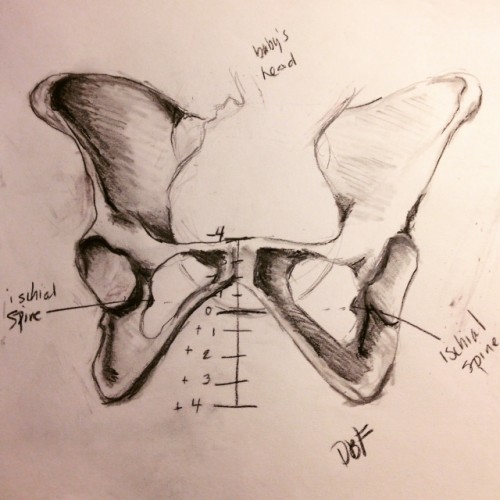
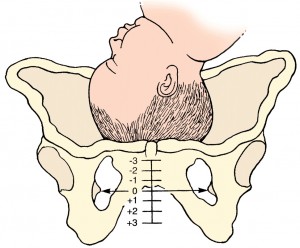
– This is the measurement of the baby’s position in relationship to the ischial spines of the pelvis. The ischial spines are marked “0″, above the spine is measured in “+” and below in “-”.

BISHOP SCORE CHART

If you receive a low Bishop score, it is also important to consider that it may because the baby is mispositioned. When a baby is mispositioned, either in an occiput posterior position or the head is asynclitic, the baby’s head is not putting efficient, effective pressure on the cervix which can account for the low Bishop score. When the baby is in an optimal fetal position, the pressure of the baby’s head against the cervix leads to effacement and dilation. So it may not just a coincidence that the score is low. Rest assured, there are ways to help determine a baby’s position and correct it if there is suspicion that baby is malpositioned. (To better understand fetal position and how to help the baby into an optimal fetal position check out “Explanation of Fetal Position”).

Why To Avoid Induction If Not Medically Necessary

When labor is induced before the body is ready, chances increase for further medical intervention. According to a study out of Stockholm, Sweden, among women who were induced, the proportions delivered by emergency cesarean section were 42% for nulliparous (first time mothers) and 14% for multiparous (mother of more then one birth). Compared to spontaneous onset, this corresponded to a more than threefold increase in risk for nulliparous women and an almost twofold increase in risk for multiparous women. (1)

In some situations where induction is being discussed, such as the baby being past the due date, a suspected large baby or low amniotic fluid, you may be able to put off the induction for a day or so if mom and baby are OK. Unfortunately, many hospitals and doctors need to schedule an induction (and rarely will this happen on a holiday or weekend!) so you may need to be a bit aggressive should you wish to avoid induction if your Bishop score is low.

For more information on labor induction, check out Understanding Labor Induction.

Hope this information is helpful for those contemplating labor induction. Happy birthing!

Sources
(1) Acta Obstet Gynecol Scand. 2011 Oct;90(10):1094-9. doi: 10.1111/j.1600-0412.2011.01213.x. Epub 2011 Jul 21. Induction of labor and the risk for emergency cesarean section in nulliparous and multiparous women. Thorsell M, et al. PMID: 21679162

(2) Midwifery, Volume by By P. McCall Sellers

Related posts:

3 Common Aches and Pains of Pregnancy and How to Address Them

Many women encounter some sort of discomfort during their pregnancy. Here are a few examples of common issues and how to find relief.

Edema
Most women experience some amount of swelling during pregnancy, especially during these hot summer months! This is mainly due to the increase of blood volume as well as dilation of blood vessel.

Asanas to do – Standing poses, gentle vinyasa flow, viparita karani (legs up the wall) or “V legs up the wall (better for second and third trimester moms), arms over head poses

Asanas to avoid - Prolonged standing or sitting.

Alternative remedies-
Swimming, increased fluid intake, red raspberry tea and nettle tea, reduce salt intake and increase intake of non-animal protein, compression hose if standing or sitting for a long while.

Wrist stiffness

Wrist stiffness is similar to carpal tunnel in that there could be impingement of the nerve due to swelling in the joint, particularly the wrists. Unlike carpal tunnel there may not be pain in the wrist, just lack of full mobility to do the edema.

Asanas to do – Shoulder opening and shoulder mobility and chest opening poses will be helpful like Arm circles, gomukasana arms (cow face pose), garudasana arms (eagle pose), supported ustrasana (camel pose), reverse namascarasana (hands behind the back in prayer). Also putting a wedge or rolled mat under the heel of the hand to lessen the flexion of the wrist

Asanas to avoid - Prolonged weight on the hands

Alternative remedies - Acupuncture, icing the wrist, milking the wrists, keeping well hydrated to help move edema through the body

Acid reflux and Heartburn
Because of the increase in progesterone which is responsible for the relaxation of the smooth muscles through the body, the sphincter at the base of the esophagus may not close as tightly as before pregnancy as well as increased pressure from the growing uterus. This can lead to acid escaping from the stomach and moving up the esophagus causing acid reflux and the sensation of heartburn.

Poses to do - Chest openers, arms up over head, inclined (about a 45 degree angle) supta virasana (reclined heros) with props.

Poses to avoid – Inversions and any pose where the head goes below the heart.

Alternative remedies
- Raw almonds, papaya enzymes, slippery elm bark, apple cider vinegar. Drink one tablespoon of apple cider vinegar with water in the morning before eating. There are two theories to why this works. One- the stomach is fooled into thinking it has enough acid to digest food and will produce less acid. The second- the apple cider helps balance the pH level in the stomach.

In Holistic Midwifery, Anne Frye explains the hazards of relying on over the counter antacids. “ Commercial antacids such as Tums and Mylanta should be taken only as a last resort and be used in strict moderation. Excessive use of antacids which contain magnesium can lead to lethargy, circulatory collapse, respiratory paralysis and coma if taken to excess. Poorly assimilated calcium from these products deposits in the placenta and leads to placental calcification later in pregnancy” (pg 965)

I hope these remedies can bring some relief to the pregnant mamas!

*Disclaimer- not meant to take the place of medical advice.

Related posts:

High-Risk Pregnancy and Yoga

A new study, “The Effects of Yoga in Prevention of Pregnancy Complications in High-Risk Pregnancies: A Randomized Controlled Trial,” conducted by SVYASA University’s Department of Life Sciences in Bengaluru, India just came out last month. The information gathered by the researchers was fascinating and may prove to be very helpful for a lot of high-risk pregnant women.

The study included 68 high-risk pregnant women who were recruited from two maternity hospitals in Bengaluru, India and were randomized into two groups: yoga and control. The yoga group received standard care plus one-hour yoga sessions, 3 times per week (28 sessions in all) primarily during their 2nd and beginning of their 3rd trimester. The yoga class was focused on asanas (poses), pranayama (breathing exercises), visualization, guided imagery, and savasana (deep relaxation). There was also instruction on how to “rest with awareness”. The control group received standard care plus conventional antenatal exercises (walking) during the same period.

RESULTS:
The results did highlight very positive results for the yoga group in comparison to the control group. The primary result seen was that the maternal blood pressure was lower. The secondary result had to do with the maternal stress rate. There was measurable improvement with the Heart Rate Variability (HRV) as well as the perceived lowering of stress from the pregnant mother’s point of view (1). The study showed significantly fewer pregnancy with induced hypertension (PIH), preeclampsia, gestational diabetes (GDM) and intrauterine growth restriction (IUGR) cases in the yoga group. There were also significantly fewer Small for Gestational Age (SGA) babies and newborns with low APGAR scores in the yoga group, as well as significantly fewer cases of preterm deliveries, which are all prevalent birth issues in India.

UNDERSTANDING THE RESULTS
The etiology of these complications mentioned above is not clearly understood; however, there is increasing evidence that maternal oxidative stress and psychological stress play a strong role (2). Numerous studies have already proven the remarkable effects yoga has on reducing stress. Stress elevates the heart rate and blood pressure and triggers the sympathetic nervous system. A study out of Harvard University states that “Yoga has been shown to reduce the heart rate, lower blood pressure, and ease respiration. There is also evidence that yoga practices help increase heart rate variability, an indicator of the body’s ability to respond to stress more flexibly” (3). Recent studies have also shown yoga to be effective in reducing oxidative and psychological stress” (4).

The India study goes on to further discuss their findings: “The reduction in the maternal stress could also have:

1) fostered multiple positive downstream effects on neuroendocrine pathway, metabolic function, and associated inflammatory responses

2) activated the vagal nerve and thereby improved parasympathetic output leading to enhanced cardiac-vagal function, mood, energy state, and related neuroendocrine, metabolic, and inflammatory responses and/or

3) promoted a feeling of well-being, perhaps by reducing the activation and reactivity of the sympathoadrenal system and the hypothalamic pituitary adrenal (HPA) axis.”

If stress reduction and lowering of maternal blood pressure were the significant results from the yoga practice, it is logical the three significant complications, preeclampsia, gestational diabetes (GDM) and intrauterine growth restriction (IUGR), showed improvement. Below are some basic notes on these three aforementioned conditions:

• Preeclampsia is when a pregnant women develops high blood pressure and has protein in her urine after 20 weeks gestation. Preeclampsia can be controlled, but the only “cure” for it is to deliver the baby. The study we are looking at concluded that the primary outcome was that maternal blood pressure was lower through the yoga practice, which can explain the decrease in preeclampsia in the yoga group.

• Gestational diabetes is a condition in which the glucose level is elevated and other diabetic symptoms appear during pregnancy in a woman who has not previously been diagnosed with diabetes. All diabetic symptoms disappear following delivery (5). There is a direct correlation between stress and elevated blood sugar levels. Again, we refer back to yoga’s ability to help lower both the oxidative stress level and the perceive stress level to help control this condition.

• Intrauterine growth restriction (IUGR) is a when the baby is under the 10th percentile of weight for their gestational age while in the womb. There are many factors that could contribute to IUGR, some include, preeclampsia, hypertension, diabetes, abnormal placentation and cardiovascular disease. It is not a far jump to think the reason IUGR numbers where decreased among the yoga group, was because there were significant improvements seen with the possible causing factor. While management of IUGR must be individualized for each patient. One management treatment, although not of proven benefit, is bed rest which may maximize uterine blood flow (6). Again, we see the benefit of yoga here. Yoga increases blood flow which can maximize blood flow to the placenta. Decreasing maternal blood pressure dilates the blood vessels, also allowing for better blood flow to the uterus.

Interestingly, the “standard antenatal practice” for these high-risk issues would have included medication, bed rest and walking. Positive results were obtained instead from a 3x per week yoga practice.


CONCLUSION:

This first randomized study of yoga in high-risk pregnancy has shown that yoga can potentially be an effective therapy in reducing hypertensive related complications of pregnancy and improving fetal outcomes. Additional data is needed to confirm these results and better explain the mechanism of action of yoga in this important area (7).


Even though there has now been research supporting yoga as a practice for high-risk women, it is still best to check with your care provider before starting a yoga class.

Sources
1. http://www.ctri.nic.in/Clinicaltrials/pmaindet2.php?trialid=248
2.http://www.sciencedirect.com/science/article/pii/S0091743512003301
3. http://www.health.harvard.edu/newsletters/Harvard_Mental_Health_Letter/2009/April/Yoga-for-anxiety-and-depression
4. http://www.sciencedirect.com/science/article/pii/S0091743512003301
5. http://www.uchospitals.edu/online-library/content=P01513
6. http://www.aafp.org/afp/1998/0801/p453.html
7. http://www.sciencedirect.com/science/article/pii/S0091743512003301